Strategic Growth Systems Driving Global Influence Through Data-Led Social Intelligence

Modern organizations aim to grow influence across wide audiences by relying on informed planning rather than guesswork. Growth systems built on measurable signals help creators, brands, and leaders understand how attention forms and spreads. Clear data patterns reveal how people react, share, and engage over time. When these patterns are studied with care, they guide smarter actions and reduce wasted effort. This approach supports steady expansion that aligns with real audience behavior.

Picture1

Influence grows stronger when insights replace assumptions. Social intelligence turns raw signals into guidance that supports long-term direction. Instead of chasing sudden spikes, focus shifts toward consistent trust, visibility, and value. Structured systems help teams decide what to share, when to share, and how to adjust based on feedback. This creates a cycle of learning that supports sustainable reach and meaningful connections.

Understanding Strategic Growth Systems and Their Role in Influence Building

Strategic growth systems combine planning, measurement, and adjustment into a single working structure. They help organizations move from isolated actions toward coordinated progress. Each system connects goals, audience signals, and performance checks in a repeatable way. This structure ensures growth does not rely on chance but on informed choices that evolve with audience needs. Many teams also leverage a reliable platform for promoting your content to test strategies, track engagement, and optimize their messaging for wider influence. Over time, influence becomes predictable, scalable, and resilient.

These systems encourage alignment across messaging, timing, and distribution. When every action fits within a clear framewok teams avoid confusion and duplication. Influence then grows through clarity rather than noise. Strategic systems also support learning since each step is measured and reviewed. This learning mindset strengthens confidence in future decisions.

Core Elements That Shape Effective Data-Led Growth Systems

A strong foundation ensures growth systems remain practical and adaptable. The following elements work together to create reliable influence pathways.

Critical Components for Scalable Influence

  • Clear objectives: guide every action toward measurable influence outcomes and shared success goals
  • Structured data review: supports pattern recognition and timely response to audience behavior
  • Content alignment: ensures messaging reflects audience interests, values, and evolving expectations
  • Feedback loops: enable continuous improvement through observation, learning, and careful adjustment
  • Performance benchmarks: provide reference points for assessing progress and refining priorities

Leveraging Social Intelligence to Decode Audience Behavior

Social intelligence transforms audience activity into understandable meaning. It examines reactions, comments, and sharing patterns to uncover intent and interest. By studying these signals, teams gain insight into what resonates and why. This understanding supports content planning that feels relevant and respectful rather than intrusive. When social intelligence informs these efforts, content gains clarity and consistency. Over time, this approach strengthens trust and recognition among diverse audiences.

Tools and Methods That Enhance Social Intelligence Accuracy

A short overview highlights how structured methods improve insight quality and reduce bias. These practices ensure decisions reflect real behavior rather than assumptions.

Analytical Frameworks for Data Precision

  • Trend tracking: reveals shifts in interest through consistent monitoring of engagement patterns
  • Sentiment analysis: interprets emotional tone within responses to understand audience perception
  • Comparative reviews: assess performance differences across varied content formats and timing
  • Signal clustering: groups similar behaviors to identify common interests and shared motivations
  • Iterative testing: validates ideas through controlled experiments and measured observation

Building Scalable Systems for Sustained Global Reach

Scalability ensures growth remains effective as influence expands. Systems designed for scale rely upon clear procedures instead of character effort. This allows groups to preserve the best whilst achieving broader audiences. Consistent frameworks additionally lessen confusion as operations develop.

Sustained reach depends on balance. Systems ought to be adaptable enough to conform while strong enough to guide action. By documenting approaches and sharing insights, groups hold momentum even as desires evolve. This balance supports long term visibility and reliable engagement across diverse groups.

Aligning Content Strategy With Data-Driven Insights

An overview explains how insight-led planning improves relevance and efficiency. Content alignment ensures messages serve both audience needs and strategic goals.

Content Optimization and Resource Allocation

  • Audience mapping: clarifies who engages and what motivates their continued interaction
  • Performance reviews: highlight which themes drive consistent attention and meaningful response
  • Timing analysis: identifies optimal moments for sharing based on activity patterns
  • Message refinement: improves clarity by adjusting tone, length, and structure using feedback
  • Resource planning: allocates effort toward formats with proven influence potential

Measuring Influence Beyond Surface Metrics

True influence extends beyond simple counts. While visibility matters, depth of engagement reveals real impact. Measuring responses, discussions, and repeated interactions provides a fuller picture. These indicators show whether messages inspire thought, trust, or action.

By focusing on meaningful measures, teams avoid chasing empty attention. Influence becomes associated with credibility and value. Over time, these measures guide smarter refinement and support steady progress rather than short-lived spikes.

Ethical Considerations in Data-Led Social Intelligence Practices

A brief overview emphasizes responsibility and respect in insight collection. Ethical practices protect trust and ensure long-term influence.

Principles of Ethical Audience Engagement

  • Transparency: builds confidence by explaining how data supports improved communication efforts
  • Privacy respect: ensures audience information remains protected and responsibly handled
  • Balanced analysis: avoids manipulation by prioritizing value over control
  • Inclusive review: considers diverse perspectives to prevent narrow or biased conclusions
  • Accountability frameworks: guide teams toward responsible decision-making standards

Integrating Growth Systems Into Organizational Culture

Growth systems succeed when embraced across teams. Integration requires shared understanding and consistent practice. Training and communication help teams see how insights support their roles. When systems become part of daily routines, influence grows naturally.

Cultural alignment also supports adaptability. Teams feel confident testing ideas and learning from outcomes. This openness strengthens collaboration and encourages innovation. Over time growth systems become a trusted guide rather than an imposed rule set.

Sustainable Influence Pathways

Sustainable influence depends on clarity consistency, and informed adjustment. Strategic growth systems provide structure while social intelligence supplies insight. Together, they create a balanced approach that supports steady expansion and trust. Organizations that adopt this model focus on learning rather than chasing trends. By relying on evidence-guided planning and ethical practice, influence grows with purpose. A reliable platform for promoting your content supports this journey by enabling testing, refinement, and responsible reach. When systems and insight work together, influence becomes durable, meaningful and scalable.
 

Why Brand Perception Is Becoming a Material Business Risk

Brand used to live in the marketing department.

Today, it sits squarely on the risk register.

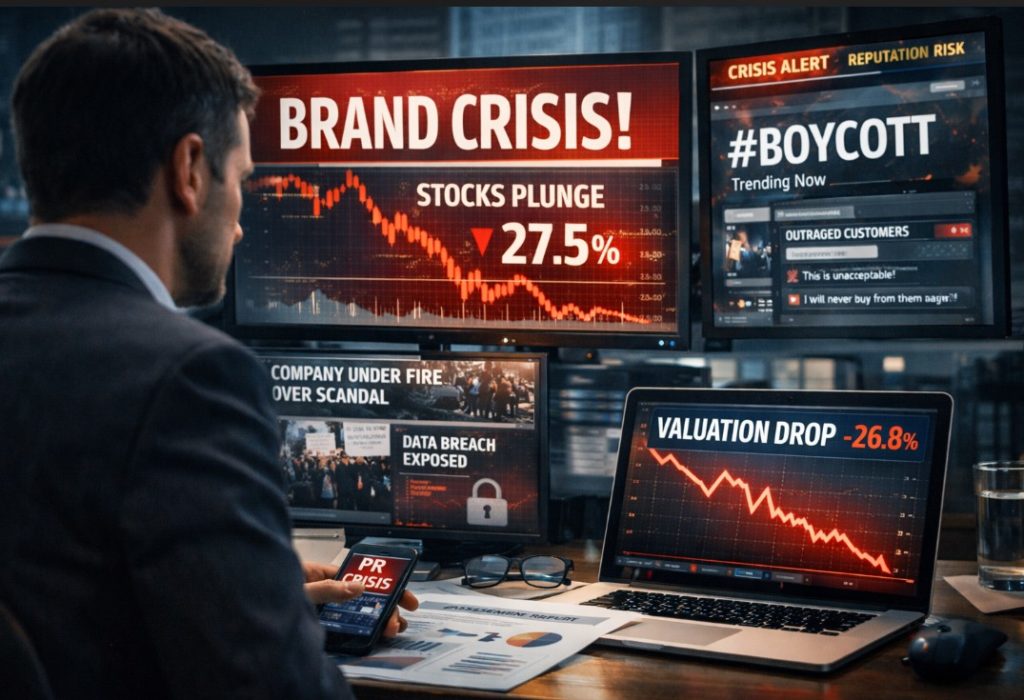
Executives, investors, and boards are watching brand perception with a different kind of attention—not because it’s fashionable, but because it now carries financial weight. Valuation swings. Talent pipelines thin out. Crisis recovery times stretch. All from shifts in how a company is perceived.

brand

This article explores why brand perception has moved from a soft consideration to a measurable business risk. It looks at what triggers volatility, how that volatility shows up in enterprise value, and what leaders can do to monitor and reduce exposure before headlines do the damage for them.

Defining Brand Perception as Business Risk

Brand perception is the collective judgment stakeholders form based on what a company does, says, and tolerates. Customers, employees, regulators, investors, suppliers—all of them contribute.

As a risk category, brand perception sits at the intersection of trust and expectation. When reality and expectation drift apart, consequences follow.

Those consequences are no longer theoretical. According to Aon’s 2025 Global Risk Management Survey – Key Findings, “Damage to Reputation or Brand” ranks eighth among global risks in 2025. That ranking reflects input from nearly 3,000 risk leaders across 63 countries and 16 industries.

Yet there’s a disconnect. The same survey shows that only 14% of respondents quantify exposure to their top risks. Brand risk is widely discussed, but rarely measured.

That gap matters.

Unmeasured risks don’t stay contained.

Why Brand Risk Is Harder to Contain Than It Used to Be

Three structural shifts explain why brand perception now behaves like a financial risk.

Social Amplification Has No Off Switch

Social platforms collapse the distance between action and reaction. A single customer experience can reach millions before internal teams finish their first meeting.

Shipping delays. Product recalls. Poor responses to public issues.

Customer sentiment doesn’t wait for quarterly reports. Research into customer views on shipping shows how fulfillment experiences shape trust far beyond logistics. Shipping isn’t just operational anymore; it’s reputational.

When dissatisfaction spreads publicly, it compounds. Algorithms reward outrage. Silence is interpreted as indifference.

Speed becomes exposure.

ESG Scrutiny Has Expanded the Definition of Risk

Environmental, social, and governance expectations have widened what stakeholders judge. Brand perception now reflects views on data privacy, labor practices, supply chains, and governance standards.

Investors track it. Regulators reference it. Employees factor it into career decisions.

The World Economic Forum’s Global Cybersecurity Outlook 2025 notes that damage to brand reputation and loss of customer trust are quantified risks in global assessments. Among highly resilient organizations, 44% report that compliance and regulation help build customer trust and brand reputation.

Compliance isn’t just about avoiding penalties. It signals intent.

Reputational Shocks Travel Across Risk Categories

Brand risk rarely appears alone. It rides alongside cyber incidents, legal disputes, operational failures, and leadership missteps.

The spillover is measurable. In Aon’s 2025 Global Cyber Risk Report – Reputation Risk Impact, 56 out of 1,414 cyber events escalated into reputation risk events. Companies experiencing those events saw an average 27% decline in shareholder value.

Malware and ransomware accounted for 60% of these reputation events, even though they represented only 45% of total cyber incidents.

Not every incident becomes a brand crisis. But when it does, the financial impact is sharp.

How Brand Perception Hits Valuation

Markets price confidence.

Brand perception feeds that confidence through expectations of future cash flows, customer loyalty, regulatory stability, and leadership credibility.

Academic and practitioner research aligns on this point. According to Monitoring Marketing Sources of Brand Reputation Risk published in Marketing Intelligence Review and available via ResearchGate, executives consistently rank brand reputation risk among the top three overall risk challenges. The study also finds that idiosyncratic brand risk is a major driver of company-specific volatility.

Negative signals don’t stay isolated. They can trigger litigation, boycotts, and customer loss—each one feeding back into valuation models.

One bad quarter can be explained.

A damaged reputation lingers.

Recruitment, Retention, and the Talent Multiplier

Brand perception shapes who wants to work for you.

High-performing candidates research employers the same way investors research companies. They scan leadership behavior, public responses to controversy, and employee sentiment.

When brand trust erodes, recruitment costs rise. Time-to-hire stretches. Attrition creeps up.

This is not hypothetical. Boards see it firsthand. The Institute of Directors’ Director Sentiment Survey 2025 reports that 88.2% of directors regularly discuss brand and reputation risk at board level. Yet only 58% receive comprehensive reporting on non-financial risks, including reputation.

Even more telling, just 45.6% review the adequacy of risk management for emerging risks such as privacy and climate.

Talent feels those gaps before reports do.

Operational Signals That Shape Brand Perception

Brand isn’t built only through campaigns. It’s shaped through daily decisions.

Small signals accumulate.

A missed delivery. A confusing return process. Even physical details like packaging and return address labels influence how reliable a company feels.

These touchpoints communicate care—or lack of it.

Operational consistency reinforces trust. Inconsistency erodes it. Over time, that erosion shows up in reviews, social commentary, and analyst questions.

Brand perception reflects operations under stress.

Measuring What Has Traditionally Felt Intangible

The biggest obstacle to managing brand risk is the belief that it can’t be measured.

That belief is outdated.

Leaders now track brand perception using a mix of quantitative and qualitative signals:

  • Share of negative versus positive media coverage
  • Social sentiment velocity following incidents
  • Customer churn after public issues
  • Employee engagement and referral rates
  • Analyst commentary tied to trust and governance

What matters is consistency, not perfection. According to Aon, widespread under-measurement remains one of the biggest gaps in current risk practices.

If it’s discussed at board level, it deserves metrics.

Monitoring Triggers Before They Escalate

Brand risk rarely arrives without warning.

Common triggers include:

  • Data breaches or prolonged system outages
  • Leadership behavior that clashes with stated values
  • Poor responses to customer complaints
  • Supply chain disruptions tied to ethical concerns
  • Regulatory findings that suggest weak oversight

Monitoring isn’t about surveillance. It’s about awareness.

Cross-functional teams—risk, communications, HR, IT—should share early signals. Delays between detection and response widen exposure.

Speed matters.

Mitigation Strategies That Build Resilience

Reducing brand risk doesn’t mean eliminating criticism. It means reducing volatility.

Effective strategies tend to share a few traits:

  • Clear accountability for reputation risk at executive level
  • Scenario planning that includes reputational fallout
  • Pre-agreed response frameworks for public incidents
  • Transparent communication during disruptions
  • Alignment between stated values and actual behavior

Organizations that treat brand as an asset to be protected—not just promoted—recover faster when things go wrong.

This approach aligns with the broader risk perspective championed by platforms such as CFI.co, where financial resilience, governance quality, and long-term trust intersect.

Conclusion: Brand Perception Is Now Board-Level Risk

Brand perception has crossed a threshold.

It affects valuation through market confidence. It shapes recruitment by signaling culture. It influences resilience by determining how much trust remains when pressure hits.

Research from Aon, the World Economic Forum, and the Institute of Directors points to the same conclusion: leaders recognize the risk, but measurement and oversight still lag.

In a world where signals travel faster than statements, brand perception behaves like any other material risk.

It deserves the same discipline.

And the same attention.